Post-Traumatic Stress: The War That Never Ends
Affiliate disclosure: As an Amazon Associate I earn from qualifying purchases. Amazon and Barnes & Noble links on this page are affiliate links; purchases may earn Soldier on Fire a commission at no extra cost to you.
What Happens to Your Mind, Body, and Soul When You're Falsely Accused
By Master Sergeant Gustave · Soldier on Fire Series
There are battles fought on the battlefield. There are battles fought in courtrooms. And then there are battles fought in the quiet, crushing dark of 3 a.m. — on a borrowed mattress, in the back room of someone else's apartment, with a few duffel bags that represent everything you have left in the world.
That last kind of battle? That's the one nobody prepares you for. That's the battle I'm going to talk about today.
Post-traumatic stress disorder has become a term most Americans associate with combat veterans coming home from Iraq and Afghanistan. And rightly so — it is a very real and serious condition that has affected hundreds of thousands of our service members. But there is another kind of PTSD that almost nobody talks about. It's quieter. It's more stigmatized. And in many ways, it is
…just as devastating.
It is the PTSD that comes from being falsely accused. From watching your name, your career, your family's security, and your very identity get dismantled by a lie — and being trapped in a legal system that moves at a glacier's pace while your life burns down around you.
This blog is for anyone who has lived this. Who is living this right now. Who has woken up unable to get out of bed, not because of what happened overseas, but because of what happened in a JAG office, a courtroom, an HR investigation, a Title IX hearing.
You are not crazy. You are not weak. And you are not alone.

No Way Out: What Rock Bottom Feels Like When the System Has You
I want to tell you something that took me a long time to be willing to say out loud.
When I was in the middle of it — stripped of my rank, staring down the possibility of a long prison sentence for something I didn't do, alone in a room that wasn't mine — I had a phrase I repeated to myself every single day like a mantra:

I said it to myself not because I believed it was a good truth — but because I had to vaccinate myself against disappointment. Every time I reached for help and came up empty, every time a phone went unanswered or a “we'll see what we can do” turned into nothing — I felt the sting of abandonment. If I accepted the worst, maybe it wouldn't hurt as much when it happened.
My bank account was empty. My phone was silent except for legal updates that never brought good news. My entire existence had been condensed to duffel bags and borrowed space. And still — I had to wake up. Get dressed. Show up. Because the only alternative was giving up, and that was never going to be my story.
If you're in that place right now, I need you to hear me: the darkness you're feeling is real. It is not weakness. It is a physiological and psychological response to prolonged extreme stress. And it has a name. Understanding what it is can be the first step to surviving i
The Two Types of Stress — And Why Legal Stress Is the Deadlier Kind
During the worst of my ordeal, I developed a framework in my own mind to try to understand what was happening to me. I categorized stress into two types, and this distinction became critical to my survival strategy.
Healthy Stress: The Kind That Fuels Action
Healthy stress is stress with a solution. It is the stress that drove my entire military career:
I need to make rank — so I study, train, and perform at my highest level.
I need to stay physically fit — so I run, lift, and eat right.
I need to cover my mortgage — so I show up and do the work.
This kind of stress is productive. It has a cause, an action, and a result. Your mind and body are wired to handle it. The military actually trains you to excel under this kind of pressure.
Unhealthy Stress: The Kind That Consumes You
Unhealthy stress is stress with no solution. It is the stress that comes from circumstances entirely outside your control — and this is what makes a false accusation so uniquely, viciously destructive to mental health.
When someone fabricates an allegation against you:
You cannot undo what they said.
You cannot speed up the legal system.
You cannot force people to believe you.
You cannot make your commanding officer unsee what they've seen.
You cannot get back the days, months, and years while the case moves forward.
This is what psychologists call perceived lack of control — and research published in the Journal of Anxiety Disorders consistently identifies it as one of the most powerful predictors of PTSD onset. When your brain cannot find a path to resolution, it stays on high alert — indefinitely. That sustained state of threat-response is what begins to destroy your body.
The Physical Toll: What Prolonged Legal Stress Does to Your Body
This is not metaphorical. This is not “I was really upset.” The stress of a prolonged false accusation is a clinical, measurable, documented medical emergency happening inside your body. Let me tell you what happened to mine — and what the science says about why.
Chronic Migraines and Vision Disturbances
When you are under sustained psychological threat, your body floods with cortisol and adrenaline. These hormones cause blood vessel constriction and inflammation — the physiological basis for stress-induced migraines. Mine were debilitating. Vision-blurring. Days in darkened rooms. I was a decorated combat veteran and I was being laid flat by headaches because my nervous system couldn't find the off switch.
GERD, Stomach Ulcers, and Gut Destruction
The gut-brain connection is one of the most well-documented relationships in neuroscience. The American Psychological Association has published extensively on how chronic stress triggers gastrointestinal disorders including GERD, IBS, and peptic ulcers. I had all of it. My body was eating itself from the inside because my mind could not find peace.
Joint Pain and Physical Deterioration
Chronic stress elevates inflammatory markers like interleukin-6 and C-reactive protein throughout the body. The result feels like your joints have aged by decades overnight. Stairs that were easy become difficult. Workouts that were routine become agony. Your body is mounting an immune response against a threat it can't physically fight — and the inflammation is the collateral damage.
Depression, Anxiety, and the Weight of Nothingness
Some mornings I could not get out of bed. Not wouldn't. Could not. My body refused. The weight of my circumstances had become a physical force.
I started seeing a mental health counselor. Almost every day. One session, I pushed back on the whole thing:
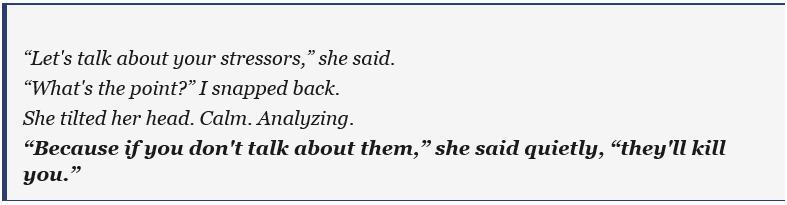
She wasn't being dramatic. Research from the National Institute of Mental Health confirms that untreated PTSD significantly increases risk of suicide, substance abuse, cardiovascular disease, and early mortality. This is a life-and-death issue. Treat it like one.
RESOURCES FOR PTSD & TRAUMA RECOVERY
The Body Keeps the Score — Bessel van der Kolk, M.D.
The definitive guide to understanding how trauma reshapes the body and brain — and evidence-based pathways to healing. Essential reading for anyone navigating legal PTSD.
Liar, Liar, Soldier on Fire — Master Sergeant Gustave (Hardcover)
A first-person account of surviving false accusations, legal PTSD, and the military justice system. Read the story behind this blog. Chapter 22 covers PTSD in depth.
Man's Search for Meaning — Viktor Frankl
Frankl survived the Holocaust and built a philosophy of meaning under suffering. For anyone who has asked “why is this happening to me,” this book is transformative.
Affiliate links: As an Amazon Associate I earn from qualifying purchases. Purchases through Amazon and Barnes & Noble links may earn Soldier on Fire a commission at no extra cost to you.
The Anguish of Jesus: When the Innocent Suffer
I want to step away from the clinical for a moment and talk about something I found in the darkest nights of my ordeal — something that didn't come from a counselor or a legal strategy or a medication. It came from a Bible verse I had read a hundred times but never really felt until that night.
I was in the book of Luke, chapter 22 — the night before the crucifixion. Jesus in the garden of Gethsemane. And I read this:

I stared at that verse. Reread it. Hematidrosis — the medical term for what happened to Jesus that night — is a rare but documented condition in which extreme psychological stress causes the capillaries surrounding sweat glands to rupture, mixing blood into perspiration. The scientific community has documented it in prisoners awaiting execution. In soldiers before impossible battles. In people under life-threatening psychological extremis.
Jesus was not performing for the disciples. He was not being dramatic. He was a human being — the Son of God in a human body — experiencing the most extreme psychological suffering the body is capable of generating. And He was innocent. And He still had to go through it.
I am not Jesus. I am not fit to compare myself to the Son of God. But I am His son. And I knew, in reading that verse, that the God who designed the universe understands what it is to be innocent and condemned. He doesn't watch from a distance. He has been where I was. He has felt what I felt.
That changed something in me. Not immediately. Not completely. But it cracked open a door that the darkness had sealed shut. And sometimes that's all you need — a crack of light.
Medicated Survival: The Reality Nobody Talks About
Let's get real about this. At my lowest point, I was prescribed a full cocktail of medications just to function:
One pill to sleep.
One pill to get out of bed in the morning.
One pill to help me speak in meetings without shaking.
One pill to calm the GERD and stomach acid.
One pill to manage the anxiety and depression.
I took them all. Every single one. And I want you to hear this clearly: there is no shame in that.
If you broke your leg, you would take the pain medication. If you had pneumonia, you would take the antibiotics. Your brain is an organ. When it is under sustained assault and begins to malfunction, treating it medically is not weakness — it is responsible, strategic self-care. It kept me functional long enough to get to the other side of my case.
But I also want to be honest about the other side of this: medication is a bridge, not a destination. It can keep you alive and functional while you do the deeper work — the counseling, the faith work, the community building, the legal strategizing. If you're relying on it without doing that deeper work, you're treading water. You need both.
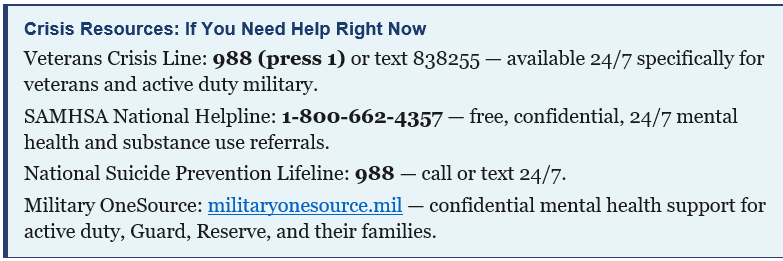
The PTSD No One Talks About: Legal Trauma and the Silence It Demands
Combat PTSD is understood. There are support groups for it. There are VA programs for it. There are documentaries about it. When a veteran comes home from Fallujah and can't sleep, people understand.
But when a veteran — or a teacher, or a pastor, or a corporate leader — is hit with a false accusation and spends two years fighting a system designed to crush them? The psychological fallout from that experience is barely acknowledged. And here is the cruelest irony:

Your attorney tells you to stay silent. The legal proceedings demand it. So you carry the full psychological weight of what is happening to you — alone, in silence, unable to defend yourself publicly or process it openly — while the world moves on without you and sometimes against you.
This forced silence is itself traumatic. Psychologists call it ambiguous loss — the grief of losing something (your reputation, your career, your identity) that hasn't officially ended yet, with no clear narrative, no public acknowledgment, no ritual of grieving. It is one of the least-understood and most-damaging forms of trauma.
Dr. Pauline Boss, who pioneered the research on ambiguous loss at the University of Minnesota, writes in her book Ambiguous Loss: Learning to Live with Unresolved Grief that this type of grief is more destabilizing than conventional loss precisely because it offers no resolution, no closure, and no socially sanctioned way to mourn. That's exactly what legal PTSD does to you.
What Research Says About Legal Trauma and PTSD
A 2019 study in the Psychological Trauma journal found that individuals who had been falsely accused and exonerated showed PTSD rates comparable to survivors of violent crime. The National Registry of Exonerations has documented the psychological aftermath extensively — depression, anxiety, hypervigilance, social withdrawal, and suicidal ideation are common in wrongfully accused populations.
The Innocence Project — which has exonerated more than 200 wrongfully convicted individuals through DNA evidence — has identified rebuilding psychological health as one of the most critical and underfunded aspects of post-exoneration life. If it's a recognized issue for exonerees, it's absolutely a recognized issue for you.
The Two Choices: Let It Break You, or Learn to Overcome It
Here's where I want to be completely direct with you, because this is the hinge point of everything.
When you are in the middle of a false accusation and the PTSD it generates, you face a binary choice. Not a comfortable binary, but a real one:

I chose Option 2. Not because I was stronger than anyone else. Not because I had some secret advantage. I chose it because the alternative was to give my accuser something they didn't earn — my total destruction. And I refused to give that away.
What Option 2 Actually Looks Like in Practice
Choosing to overcome doesn't mean pretending everything is fine. It doesn't mean toxic positivity or spiritual bypassing or “just pray harder.” It means building a structure for survival:
Get professional mental health support. A licensed therapist or counselor who has experience with trauma, legal stress, or military mental health. This is not optional. It is mission-critical.
Get a support network of people who know the truth. Even if they can't speak publicly, you need people who believe you. Isolation is the enemy of survival.
Establish daily physical discipline. Exercise is one of the most clinically validated treatments for PTSD available. It is free. It is immediate. And it directly counteracts the cortisol and adrenaline flooding your system. Move your body every single day.
Maintain spiritual practice. Whatever that looks like for you — prayer, Scripture, church, ministry community. Your faith is not a luxury in this season. It is load-bearing infrastructure.
Let your attorney carry the legal weight. Your one job on the legal side is to follow their guidance. Trying to manage the legal strategy yourself while managing your own mental health is a two-front war you cannot win alone.
What Scripture Anchors You When the Ground Is Gone
I don't want to give you a list of nice-sounding Bible verses and send you on your way. I want to give you the ones that actually hit — the ones that found me at the bottom and gave me something to hold onto.
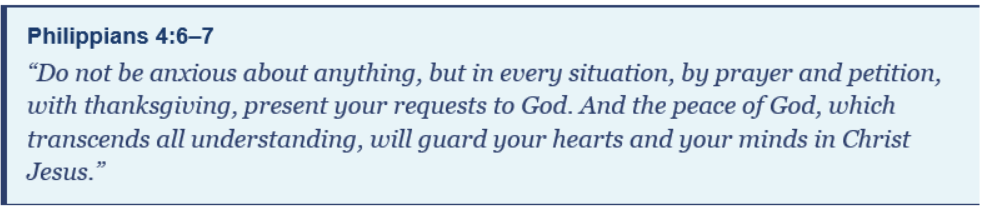


Jesus didn't say you might have trials. He said you will. He also said He has already overcome the very world that is currently trying to crush you. That's not a motivational poster. That is a legal declaration from the throne room of Heaven.
FROM THE SOLDIER ON FIRE SERIES - BOOKS THAT UNDERSTAND YOUR FIGHT
Liar, Liar, Soldier on Fire — Paperback
The paperback edition. Perfect for sharing with counselors, attorneys, chaplains, or anyone who needs to understand what legal PTSD really looks like from the inside.
Liar, Liar, Soldier on Fire — Audiobook (purchase link pending availability confirmation)
Listen during runs, drives, or quiet moments. The audiobook edition. Available on Audible. Narrated with the same raw honesty that defines the written version.
Pursuing Justice: Legal Rights of Military Personnel — William T. Barto
A practical legal resource for service members navigating the military justice system. Know your rights before you need them.
Affiliate links: As an Amazon Associate I earn from qualifying purchases. Purchases through Amazon and Barnes & Noble links may earn Soldier on Fire a commission at no extra cost to you.
Breaking the Silence: A Practical Survival Protocol
If you are in the middle of a false accusation right now and recognizing yourself in everything I've described above, here is a concrete protocol. Not advice. A protocol. Because you are in a fight, and fighters follow protocols.
Acknowledge it. Say it out loud, at least to yourself: I am experiencing trauma. What I feel is real. It has a name. I am not going crazy.
Get clinical support. Contact the VA (va.gov/mental-health), a private therapist, or your post's chaplain. Do not navigate this alone. Silence and isolation are medically dangerous.
Tell your attorney. Your mental health state is relevant to your legal defense. Your attorney needs to know if you are struggling. Some jurisdictions allow mental health evidence to be presented as context in legal proceedings.
Build your daily structure. Wake up at the same time. Eat. Exercise. Pray or meditate. Show up. Even if the only place you're showing up to is your living room. The structure is what keeps you from free-falling.
Connect with community. Reach out to GFAM Ministries. We have a network of veterans, men, women, and believers who have walked this road and are still walking with others who are on it now.
Document your health for future use. Your medical records of mental health treatment during this period may be relevant to a future civil lawsuit against those who falsely accused you. Keep records.
Final Word: Some Wounds Don't Bleed. But They Are Still Real.
I want to leave you with the most important thing I know about surviving this.
Some wounds don't bleed. Some battles leave scars that no X-ray can find, no MRI can locate, no Purple Heart can honor. But just because no one can see them doesn't mean they aren't real. And just because no one is coming to save you doesn't mean you can't be saved.
The system did not care whether I lived or died. It did not care whether I made it through. But God did. And I did. And my family did. And the people reading this blog are the reason I write it — because I believe with everything I have that what I went through was allowed by God to produce something that could reach someone who needs to hear it.
You are not done. The story is not over. The camel becomes the lion. The lion becomes the child. And the child — free, rebuilt, unshackled — is who you are going to be when you come through this.
Hold on.
— Master Sergeant Everell Gustave
Author, Liar, Liar, Soldier on Fire | Founder, Soldier on Fire LLC
Connect with SOLDIER ON FIRE
You don't have to walk this alone. Soldier on Fire is here for veterans, families, and believers in the middle of their hardest seasons.
Website: soldieronfire.net
Get the book: Liar, Liar, Soldier on Fire on Amazon
Prefer Barnes & Noble? Buy Liar, Liar, Soldier on Fire in hardcover at Barnes & Noble.